Thursday, November 22, 2012

O-bla-di, O-bla-da

 Today is Thanksgiving!

After the last few days, I am even more grateful for all of the blessings that I have in my life. With thanks to God for FAMILY (and Skype technology), amazing FRIENDS near and far, a wonderful and supportive community here in Israel, a hope for continued peace here in the Middle East, and of course, all of the overpriced, American-influenced stores here that carry canned-pumpkin...

Happy Thanksgiving!

Thanksgiving feast for lunch at Pardes. It's not the same as my Mom's home-cookin', but it's still delicious!

My beautiful friends at lunch! Cara, Heather, and Me

Laura and her friend from college, Avi. 
Cute, guys.

Chowing down at community lunch.

Naomi and Mary-Brett! Happy that classes are over for the week :)

Every Thursday, Pardes takes part in social action projects around Jerusalem.
My project is working with an organization called Ezrat Avot, where we pack bags of food for needy families.


Volunteering!

An evening of football, friends, and brewskis. 

Wednesday, November 21, 2012

Heavy Boots

“We need enormous pockets, pockets big enough for our families and our friends, and even the people who aren't on our lists, people we've never met but still want to protect. We need pockets for boroughs and for cities, a pocket that could hold the universe.” 
-Jonathan Safran Foer, Extremely Loud and Incredibly Close


In one of my favorite books, Extremely Loud and Incredibly Close, the main character, a 9-year old boy, talks about how he becomes overwhelmed with the state of the world. He calls this having "heavy boots."
"Seeing homeless people gives me heavy boots."  
"Hearing that my best friend's grandma had died gave me heavy boots."
This metaphor has always resonated with me, because I can easily feel overwhelmed with the pain and suffering in this world.

Today, I have particularly heavy boots.

The past week has brought a lot of destruction, in all senses of the word, to southern Israel and Gaza. There are constant air raid sirens and bombs falling in the south, thousands of soldiers being called in from the reserves, casualties on both sides of the border. Today, there was a bus explosion in Tel Aviv, wounding 21 people.

When we heard news of the bus explosion, we also heard that there were celebrations in the West Bank and Gaza. To be clear: Hamas was celebrating the deaths of innocent civilians; rejoicing in the fact that they "successfully" carried out a terror attack. This is nothing surprising, or new. 

These same terrorists are jeopardizing the lives of their own people, placing their rockets and weapons in playgrounds, schools, mosques, etc., making it nearly impossible for Israel to avoid civilian casualties. They are not protecting their innocent, but rather, exploiting them.

During college, I participated in a unique and transformative initiative called the Race Relations Project (now the World in Conversation Project). The purpose of the project is to "facilitate radically open dialogues that expand perspectives and invite greater understanding between people locally and globally."

I look back on this project and consider it one of the most important things in which I've participated. Why? It opened me up to different people, different perspectives, different narratives. It taught me how to put myself in someone else's shoes, and to walk through the world with empathy and compassion.

It gave me the ability to see someone radically different from me, and say, "I might not agree with you, but I understand why you might feel/act the way that you do." I've worked at cultivating an attitude that rejects the "Us Vs. Them" mentality. I've tried to live with my heart directed towards compassion and understanding, rather than fear and hatred.

But today, as I sit here in my apartment in Jerusalem, Israel, I'm at a loss for understanding. My sense of compassion is wavering. I have never felt so "Us Vs. Them."

I have heavy boots.

How do you try and create peace with people who have a completely different narrative from you? There is no starting point. And how do you pursue peace in a place where peace feels so far away? There is no hope for a resolution. How do you seek to understand someone that wants to kill you, and bring about the destruction of your people?

I'm finding it incredibly difficult to hold all of these thoughts in my head and heart at one time. But I'm trying, because I can't think of any other way to live.

As I finish writing this, Israel and Gaza declared a cease-fire. May it bring continued quiet, alleviation of suffering, and lighter boots for all of us.


Saturday, November 17, 2012

Narrow Bridge

"You're worried? You don't need to be worried. The rockets can't reach Jerusalem," they said.
"You don't feel safe in Tel-Aviv? Come stay with us for Shabbat," we said.
"No, Mom, I'm fine. Jerusalem is out of the range of the rockets. Don't worry," I said.

Yesterday was Friday. I spent the day doing my usual "Friday things": shopping, cooking, cleaning, coffee with a friend. Even though there is a heaviness in the country, with southern Israel and now Tel Aviv under rocket attack and many soldiers being mobilized near Gaza, LIFE in Israel goes on as usual.

As Shabbat was approaching, I was running around like any other week. I quickly finished cooking my dish for dinner, threw the dirty dishes in the sink (and promised my roommates I would do them later), took a 5 minute power-shower, threw on some clothes and make-up, and lit the candles. With all the events of the past week, I was eager for some Shabbat rest, while being fully aware that this was a luxury, as other parts of this country and region would be having no rest at all.

We arrived at shul (services) right before the beginning of the main prayer service. Just then, we heard it: the air raid siren, indicating that a rocket has been launched near the area, and we should get to a stairwell or shelter as soon as possible (in Jerusalem, you have about a minute).

Everyone calmly left the room and went into the stairwell. We waited for a few minutes, and then returned to the service.

I was pretty shaken up. After all, I had been told many times that the rockets couldn't reach here. And we really had no information about what happened and where it landed, because no one had their cell phones. As we started praying, I looked around the room and saw the intensity and fervor with which people were praying. It was as if people were taking their pain, anger, anxiety, and turning it into passionate prayer. I was so moved that tears rolled down my face the entire service. I wasn't scared, but just felt incredibly sad. I kept asking myself, "why is this happening?"

After services, I went to dinner with friends. Everyone was a little freaked out, but happy to be in each other's company. Today, it seemed as if life is going on as usual; kids playing outside, people going out for a run. Israelis do not allow their lives to be dictated by fear, and so, neither will I.

My experience last night was just a small taste of what Israelis in the south are going through right now, under the constant threat of rockets. Close to 70,000 soldiers from the reserves are being called in to serve, a few of my friends and people that I care for deeply included in that number. This is the harsh reality of living in Israel.

I'm deeply grateful for the soldiers who are fighting to defend this country. I regret that this is the way it is right now, as there are innocent people suffering on all sides. There are no winners here.

I appreciate all of the concern from friends and family. Thank God, I feel safe and supported by a wonderful community. I am directing my prayers and thoughts to those in the south, to our brave soldiers, to the people on both sides living in fear, to all those who seek true peace.

May this all end soon.


Saturday, November 10, 2012

The Power of Prayer


As part of the Pardes educator's program, I was asked to share a d'var Torah on this past week's Torah portion on our school's blog (found here). 
A d'var Torah, literally "word of Torah," is an opportunity to share a personal interpretation of a text or idea. Sometimes they are given orally, written down (like below), or presented in other creative ways. 
Anyway, here is mine (my first ever!), written on portion Chayei Sarah (The Life of Sarah).
-------
This week’s Torah portion, Chayei Sarah, is chock-full of fascinating narrative. We’ve got the death (and life?) of Sarah, the purchase of the burial plot in Hevron, Rebekah by the well in what is the first shidduch (matchmaker) arrangement in the Torah, and of course, the burial of Abraham by his two sons, Isaac and Ishmael.
With all of these familiar names and “key players” in the Torah, I was strangely drawn to the narrative surrounding Abraham’s servant whose name is never actually mentioned in the text.[1]
Here’s the brief background: In his old age, Abraham desperately wanted to find a wife for his son, Isaac. So, he sends his faithful servant to Abraham’s birthplace to find a wife for his son.
The servant obliged Abraham and went to Nahor, armed with lots of riches and bounty. When his servant arrived at his destination, the well[2], he said the following, in what is the first prayer for divine guidance in the Torah:
“O Lord, God of my master Abraham, grant me good fortune this day, and deal graciously with my master Abraham: Here I stand by the spring as the Daughters of the townsmen come out to draw water; let the maiden to whom I say, ‘Please, lower your jar that I may drink,’ and who replies, ‘Drink, and I will also water your camels’—let her be the one whom You have decreed for Your servant Isaac[3]. Thereby shall I know that you have dealt graciously with my master.”
Bereishit 24:12
Just as the servant finished saying the prayer, Rebekah, Isaac’s future wife, appears at the well. And what does she do? She offers the servant water, and then quickly draws water for the camels…exactly what the servant had prayed for!
This year at Pardes, I am taking the Jewish Educator’s Track class on tefillah (prayer). The class is specifically geared towards educators, and those who want to help others connect to prayer in a meaningful and significant way.
In the first half of the year, we explored different ideas and methods of prayer, the idea being that before we can teach prayer, we need to be “pray-ers” ourselves.
As someone who finds it difficult to connect to prayer, but actively strives to do so, I find this class fascinating. Lately, we have been trying to answer the seemingly simple question: why do we pray?
One answer to this question could be what we see at first glance in this week’s parsha: We pray because we believe that if we pray hard enough for something, we will receive it.
I’m very challenged by this explanation, because the reality that I see looks much different.
We can pray for significant things: health, happiness, well-being, family, love, etc. Unfortunately, our prayers aren’t always answered immediately, and sometimes, not at all. (Spoiler Alert: We even see this in the Torah, in the very next chapter, when Isaac prays for a child and it takes 20 years for that prayer to be answered (Bereishit 25: 21)).
So, why pray?
At closer inspection of the servant’s supplication, we get a better insight into the nature of his prayer. Abraham’s servant prays for “הקרה,” “good fortune,” or to “bring something good to pass”. He doesn’t ask God outright for a wife for Isaac, but rather, he asks for a sign. I would add, he also asks for the ability to recognize the sign when it happens.
So perhaps, this is why we pray. We don’t expect God to give us what we want, but to grant us the ability to open our eyes and see what is before us… to guide us in the right direction.
Lastly, I’d like to direct our attention to the “pray-er” in this situation, Abraham’s servant. In other places in the Torah, we see the prayers of Abraham, Isaac, Jacob, Moses, etc. While the Torah stresses that they, too, are human, they are unarguably hugely important figures of their time, and of our tradition.
And here, we have Abraham’s servant, the first person we see in the Torah praying to God for divine guidance. We know very little about him, not even his name. But he, too, had the ability to speak with God, and even had his prayer answered.
From this story, we can derive something significant about prayer: no matter who we are—or where we are—in the context of the world around us, we have the ability to pray to God.  While this might not be an answer to the complicated question, “why pray?” it certainly illustrates how the Jewish tradition feels about everyone having the ability to be in relationship with God.
Shabbat shalom!

[1] Commentators say that the servant’s name was Eliezer (from Bereshit 15:2).
[2] The well outside the city is where the women came out to draw water every evening (Bereshit 24:11). Later in the Torah, we see that Jacob and Moses also found romantic fortune at the well (Bereishit 29:9-11; Exodus 2:15-21) This must have been the place to go before the advent of JDate. Har-har.
[3] What’s with the camels? This can seem kind of strange through our modern lenses. Abraham’s servant brought 10 camels with him to the well, in order to give the camels as a form of payment to the woman’s father, in return for her hand in marriage (…er, let’s leave this one for now). The servant is looking for a woman that will not only serve him water, but will also water the camels, symbolic of overflowing hospitality and kindness.

Wednesday, October 31, 2012

Gone Hikin'

This past weekend, I was fortunate enough to be included in a shabbaton with some of my classmates at our teacher's house. We went on a hike beforehand, which was b-e-a-utiful.

I also got to use my new camera lens! My first eBay purchase (they were practically giving it away!). Nothing too impressive yet, but I hope to improve as time goes on. As I always say, you can never have too many hobbies. Right?

Roadside hoodlums.

Roomies pre-hike 

 I think this captures our relationship pretty well.

Israeli wilderness

A beautiful day...


Rabbi Meir: Torah scholar on weekdays; Tour guide and water enthusiast on weekends. 


The group after the hike

We Are!

Penn State friends in Israel!!!


That is all.

Sunday, October 14, 2012

Sukkot 2.0

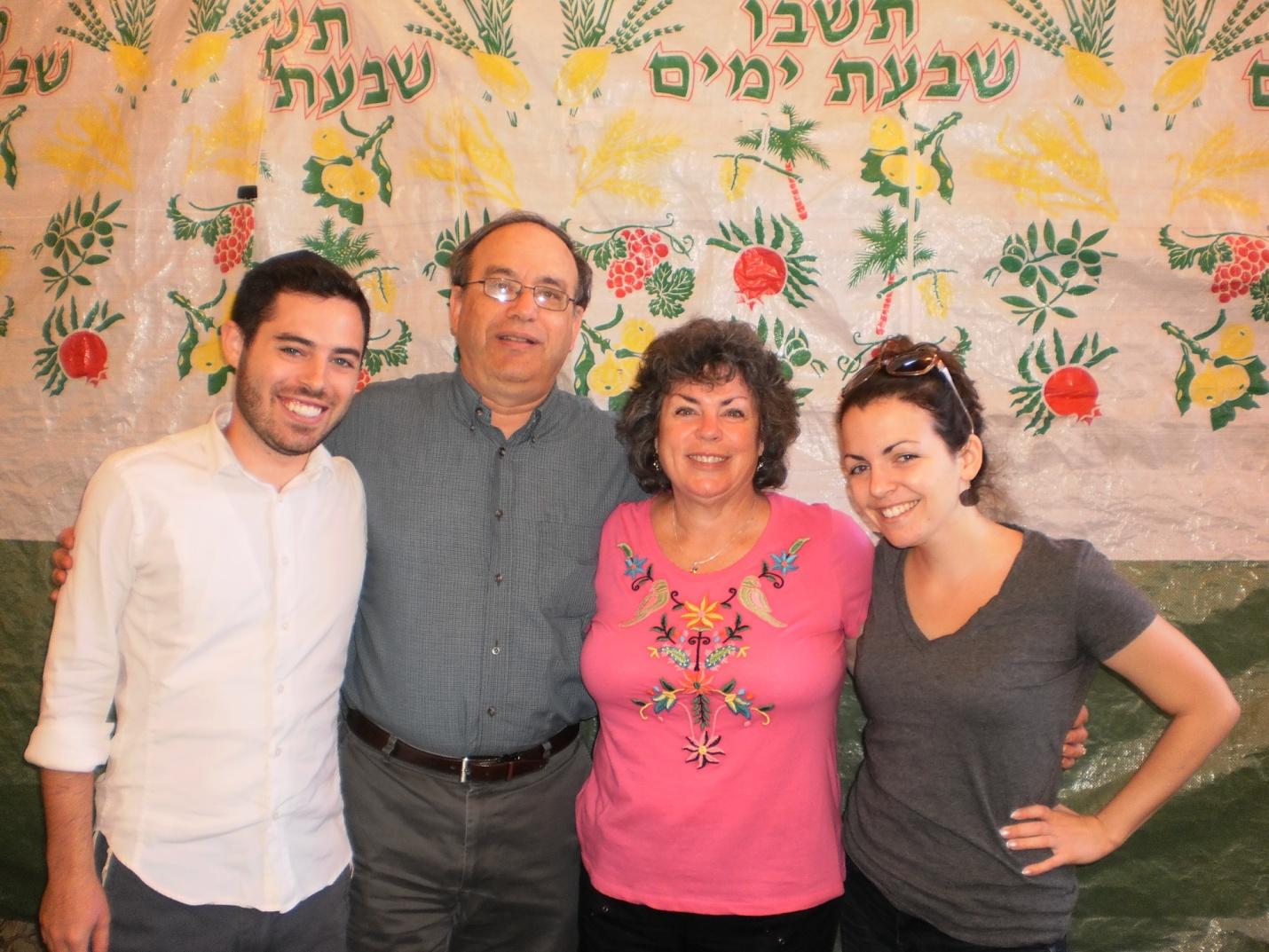
I have decided that Sukkot is my favorite holiday to celebrate in Israel. 

Appreciating the simplicity of life. Showing gratitude for our blessings. Being in the great outdoors. Quality time with friends. An offensive amount of food. A reason for my family to say, "a week off from school? come home and get a job!"

What's not to love? :)

(Here's my post from last year's Sukkot)

Sukkot in apartments...

Sukkot at restaurants...


Our humble, cozy sukkah :) We even slept in it one night!

Putting up the sukkah. Sorry, Laura.


Making decorations! This is a paper chain made out of newspaper. Whatever, we're on a budget.
In other news, I look 12.

Roomies!

Pop quiz: Which self-portrait of my roommates did I make?


Friends from California invited us over for dinner in the sukkah!

Some of my favorite BCI little ones! I guess Aaron had too much Sukkot-fun. 

Tait and Sarah... their first sukkot in Israel!

Is that YouTube sensation Andrew Lustig?
Yes, yes it is. He came to visit. As usual, he is making friends from all walks of life.
(PS- he's actually a YouTube sensation)

Our Talmud teacher, Leah (on the right), had our whole class over for a meal in her amazing sukkah. 
She said that when her family bought the apartment, part of the appeal was the potential for building an awesome sukkah. I'd say, mission accomplished!


Family in Israel! My cousin Dan, on the left, and my Uncle Steve and Aunt Anita. 
Dan is studying for the year, and his parents visited for their first time in Israel.


Thursday, October 11, 2012

Picture Rewind

I was going through my camera, and realized that I never posted pictures from Kelly & Peter's visit to Israel in April!  Silly me. Please excuse the fact that these are 6 months late.

Kelly is a dear friend from growing up, and Peter is her husband. Kelly accepted me as a friend back in the day, when I wore metallic white lip stick and thought that my Old Navy tech vest was my #1 stunner. It was great to reconnect with her in the Holy Land. We visited all over!

This is also a shame-less ploy to encourage other people in my life to visit Israel. You, too, can ride a camel and smear mud on your face! :)

Playing at the Dead Sea

Floatin'

Dead Sea giggling. After all these years, we still find simple things amusing :)

Kelly & Peter in the Golan Heights
Kelly on a camel! Look at that smile!

Sea of Galilee. Kelly & Peter loved the north!

Hostel in Tiberias. This was Kelly's first hostel experience :)
It was kind of like sleepovers when we were little, except with 4 additional strangers.

You can call me navigator.  Or just Lauren is fine.

Kelly & Laura try to navigate the map.
Laura's feet, flying' free

Roomie and I in the Golan Heights. Please note the appetizing matzah on our plates.

Ba'hai Gardens in Haifa

Me and Laura in Caesarea, showing some Israel love


Sunday, October 7, 2012

Happy Bellies :)

With a week off from classes, and many meals and parties to go to, Na'omi 9 has been cooking up a storm! Here is a sampling of some of the dishes we made. 

It was a real gift to have the time to prepare new foods and dishes, and even more of a gift to have the time to enjoy them with friends, both old and new.

No, I do not have a future in food photography.

Sesame-crusted tofu and mushrooms. Even the meat-eaters liked this one.

My roommate Emily is an amazing baker! This is a cheesecake with peaches on top.
Droooool. 


Lentil-barley salad with feta.
This was the first Moosewood recipe that I tried. It was a hit! 


Challah french toast casserole.  
Leftovers never tasted so good.


Swiss-chard, mushroom, and feta crustless quiche. Yum!

 Home-made granola. (Insert dirty hippy joke here).

My roommate Laura has been perfecting a challah recipe for the past few months. She graciously shared the recipe with me, and this was the batch we made together.
If this doesn't land me a nice Jewish boy, I don't know what will.